Expert German Auto Repair in Colorado Springs
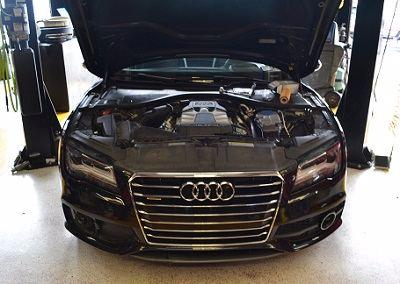
Finding a mechanic who understands the intricacies of German engineering can feel like searching for a needle in a haystack, but the health of your vehicle depends on it.
You start your car and a warning light appears on the dash, or you hear a new sound from the engine compartment. Finding the right repair shop becomes your next step.
Local search results show dealerships, chain stores, general mechanics, and shops like us at Big Mission Automotive, that focus on German brands. Where you take your car matters. Some shops handle basic repairs. Others understand the specific needs of BMW, Mercedes-Benz, Audi, Volkswagen, and Porsche vehicles.
German cars use different engineering than American or Japanese models. The electrical systems work differently. The engines have unique designs. Even routine maintenance follows different schedules and procedures.
Big Mission Automotive works exclusively with these German brands. We stock the correct parts and use the proper diagnostic equipment. Our mechanics train specifically on these vehicles.
When German manufacturers design their cars, they build in advanced features and tight tolerances. Regular shops might miss important service points or use incorrect procedures. We follow factory specifications for each repair. Your German car was built with precision. Maintaining it requires the same attention to detail.
The Engineering Distinction
We often get asked why a German oil change costs more, or why a brake job on an Audi is more involved than on a Ford. It comes down to tolerances.
German engineers prioritize driving dynamics above almost everything else. To get that specific “Autobahn feel,” they utilize complex suspension geometries and high-pressure fuel systems. They use advanced electronics that monitor operation down to the millisecond.
Take the cooling system. On many domestic cars, a water pump is a simple mechanical part. On a modern BMW? It might be an electric pump that varies speed based on engine load, controlled entirely by the ECU. If it fails, the car enters “limp mode” immediately to protect itself.
A general mechanic might see a cooling issue and swap the thermostat. A german auto specialist knows better. We know that on certain N-series engines, the water pump and thermostat have nearly identical lifespans. They should almost always be replaced together. That specific knowledge saves you from being stranded on the side of the road two weeks later.
Why General Shops Often Struggle
We have respect for general repair shops. They keep millions of cars moving. But when you bring a sophisticated German vehicle to a shop that spends 90% of its day on Hondas and Toyotas, you face specific risks.
The Tooling Gap
German manufacturers love proprietary fasteners. You won’t find standard hex bolts in many critical areas. Instead, you will find Torx, E-Torx, Triple Square, and single-use aluminum stretch bolts.
We invest heavily in manufacturer-specific tooling. This ensures we can take components apart without damaging the surrounding area. It means we can lock camshafts in the exact position required by the factory manual during a timing chain service. No guessing.
The Diagnostic Puzzle
This is where the difference is most obvious. Modern cars have dozens of computers (modules) talking to each other. When a warning light triggers, it provides a code. Many shops think the code is the answer. It isn’t. The code is a symptom.
If you get a “System Too Lean” code, a novice might immediately replace the oxygen sensor. But on a VW or Audi, we know that code is frequently caused by a failing PCV valve or a vacuum leak in the intake manifold runner.
We don’t guess. We look at “live data” – the actual stream of information coming from the sensors. We watch fuel trim levels. We monitor voltage fluctuations. We pinpoint the failure before we ever start throwing parts at the car.
Common Issues We See (And How We Fix Them)
Every brand has quirks. Because we see these cars every day, we know exactly where to look when a customer describes a symptom.
BMW: The Cooling System and Oil Leaks
We love BMWs. They earned the “Ultimate Driving Machine” title. However, they use a significant amount of plastic in their cooling systems. Radiator end tanks. Expansion tanks. Coolant flanges.
These parts endure thousands of heat cycles. Eventually, the plastic turns brittle. If you smell something sweet after parking, pay attention. A catastrophic cooling failure can warp an aluminum cylinder head in minutes.
Oil leaks are another hallmark. The oil filter housing gasket is a notorious culprit. The danger here isn’t just the oil loss. On many models, oil leaking from this housing drips directly onto the serpentine belt. If that belt slips and shreds, fragments can be sucked into the engine through the front main seal. That turns a $600 leak repair into a $10,000 engine replacement. We check these gaskets at every service interval. We want to catch them early.
Audi and Volkswagen: Timing Chains and Carbon Buildup
The TFSI and TSI engines are marvels of power. But they utilize direct injection. In older engines, fuel sprayed over the intake valves, keeping them clean. With direct injection, fuel sprays directly into the combustion chamber. Over time, oil vapors bake onto the back of the intake valves. This carbon buildup chokes airflow.
You might notice a rough idle. Maybe poor fuel economy. Or just a hesitation when you step on the gas. We perform manual carbon cleaning to restore the engine’s original performance.
We also monitor timing chains closely. While chains are theoretically “lifetime” parts, the tensioners on certain engine generations can fail. We can electronically monitor the “phase position” of the cams to tell if the chain has stretched beyond a safe limit.
Mercedes-Benz: Air Suspension and Transmission Conductors
Mercedes is legendary for ride quality. This is often thanks to the Airmatic suspension. But air struts leak. Compressors burn out.
If you see your Mercedes sagging in one corner after it sits overnight, bring it in. Driving on a leaking strut forces the compressor to run constantly. Eventually, it dies. Addressing the leak early saves the compressor.
We also frequently see issues with the 7G-Tronic transmission conductor plate. The sensors embedded in this plate tell the transmission how fast the shafts are spinning. When they fail, the car goes into limp mode. We handle these repairs with the necessary coding and fluid exchange procedures.
The Parts Debate: OEM vs. Aftermarket
One of the biggest variables in repair pricing is the quality of parts.
When you search for “german auto repair near me,” you might find a shop quoting a price that seems impossibly low. Usually, they are using “white box” aftermarket parts.
Here is the reality of the supply chain. German car manufacturers (like BMW) do not make their own control arms or sensors. They buy them from suppliers like Lemförder, Behr, Bosch, and Continental. These are Original Equipment Manufacturers (OEM).
We prioritize using OEM parts. These are the exact same parts you get at the dealer, made on the same assembly line. The only difference? No car brand logo stamped on the box. Cheap aftermarket parts often reverse-engineer these components. They might look identical. But the rubber bushings are softer. The metal is lower grade. The electronics respond slower.
Putting a cheap control arm on a Porsche doesn’t just reduce its lifespan; it ruins the steering feel. We refuse to compromise your vehicle’s integrity to save a few dollars today, because we know it costs you more tomorrow.
The Importance of Factory Scheduled Maintenance
There is a myth that you only need to take your car in when something breaks. This is the most expensive way to own a German car. Preventive maintenance keeps running costs reasonable. But you have to follow the right schedule. And sometimes, the factory schedule is… optimistic.
The “Lifetime Fluid” Myth
Many manufacturers claim the fluid in your transmission or differential is “lifetime fill.”
We disagree. “Lifetime” usually means the lifetime of the warranty, or perhaps 100,000 miles. But these cars are built to go 200,000 or 300,000 miles if cared for. Old fluid breaks down. It loses its ability to lubricate.
At Big Mission Automotive, we recommend servicing transmissions and differentials at realistic intervals – often around 60,000 miles. We want the mechanical components to last as long as the rest of the car.
Brake Fluid Flushes
German cars are heavy and they are fast. They generate immense heat during braking. Brake fluid is hygroscopic. It absorbs moisture from the air over time. Water in your brake lines lowers the boiling point of the fluid. Under hard braking, that water can boil and create gas bubbles. Gas compresses. Liquid does not. The result is a spongy pedal or total brake fade. Moisture also corrodes expensive ABS modules from the inside out. A simple flush every two years prevents thousands of dollars in damage.
Diagnostic Fees: What Are You Paying For?
This is a common point of friction. You bring the car in, we charge a diagnostic fee, and it feels like you should only pay for the repair itself. Think of the diagnostic fee as paying for the expertise, not the minutes on the clock.
Identifying an intermittent electrical fault in a wiring harness that snakes through the chassis takes skill. It requires reading wiring diagrams that look like city maps. It involves testing circuits under load. When we charge for diagnostics, we are charging for the assurance that we are fixing the right thing.
We have seen customers spend thousands at other shops replacing alternators and batteries, only to find out the issue was a corroded ground strap. We could have identified that with an hour of proper testing. Our goal is accuracy. We want to fix it once.
Choosing the Right Shop “Near Me”
You have options. We know that. So how do you decide if Big Mission Automotive – or any shop – is the right fit?
Look for Specialization
Does the shop claim to work on everything from pickup trucks to hybrids to Ferraris? While talented generalists exist, jack-of-all-trades shops rarely have the depth of knowledge required for complex German repairs. Look for a shop that specifically highlights European expertise.
Transparency
Do they show you the problem? We believe in digital inspections. If we say your control arm bushings are torn, we want to send you a photo or video. See the tear yourself. You shouldn’t have to take our word blindly. You should be part of the process.
Warranty
A shop that trusts its work backs its work. If a mechanic isn’t willing to offer a solid warranty, they might not be confident in the parts they are buying. We stand behind what we do. We want you to feel safe.
Communication
Do they explain things in plain English? Or do they drown you in technical jargon? We take the time to explain why a repair is needed. If it can wait, we will tell you it can wait. We help you prioritize based on safety and budget.
The Value of a Relationship
We aren’t looking for one-time transactions. We are looking for clients. When you bring your car to Big Mission Automotive consistently, we get to know the vehicle. We know we replaced the water pump last year, so we don’t need to worry about that. We know you are planning a road trip next month, so we check the belts twice.
This relationship allows us to spot trends. If we notice a small seep starting, we can monitor it over three oil changes rather than panicking and selling you a repair immediately. We treat your car as if our own families were riding in it.
Why We Do What We Do
We are car people. We understand the feeling of merging onto the highway in a well-tuned BMW. We appreciate the solid “thunk” of a Mercedes door closing. We respect the rally heritage of an Audi Quattro system.
We founded Big Mission Automotive because we saw a gap. On one side, dealerships offer expertise but often come with high overhead and a corporate feel. On the other side, general repair shops offer lower prices but often lack the specific training to handle these machines correctly.
We built something different – a shop with dealership-level expertise but the personal touch and fair pricing of an independent. Our over 400 5-star ratings prove this formula works. Customers appreciate getting factory-trained technicians who take the time to explain repairs, not just process them.
What to Expect When You Visit Us
When you schedule an appointment with us, we design the process to be low-stress.
- Intake: We listen to you. You know your car better than anyone. If you say it feels ’weird’ at 40mph, we take that seriously.
- Inspection: We perform a comprehensive health check. We aren’t just looking for the problem you came in for; we are looking for safety issues you might not know about.
- Approval: We send you a detailed report. No work begins without your explicit permission. No surprise bills. Ever.
- The Work: Our trained technicians perform the repairs using the correct procedures and torque specs.
- Quality Control: We test drive the vehicle. We verify the repair. We make sure the car is clean.
- Pickup: We walk you through what was done and get you back on the road.
Keeping Your German Car on the Road
Owning a German vehicle is a commitment. It requires a bit more attention than a standard commuter car. But the reward is a driving experience that is hard to match.
Don’t let the fear of maintenance costs ruin that experience. The horror stories you hear usually come from neglect or improper repair. With the right partner, these cars can be reliable and capable of high mileage.
If you have been searching for “german auto repair near me” and feeling overwhelmed by the options, stop by Big Mission Automotive. Let us take a look under the hood. Whether you need a simple oil service, a complex engine repair, or just an honest opinion on a noise you’re hearing, we are here to help.
Your car deserves expert care. You deserve peace of mind. We provide both. Schedule your appointment today and experience the difference specialized German auto expertise makes.