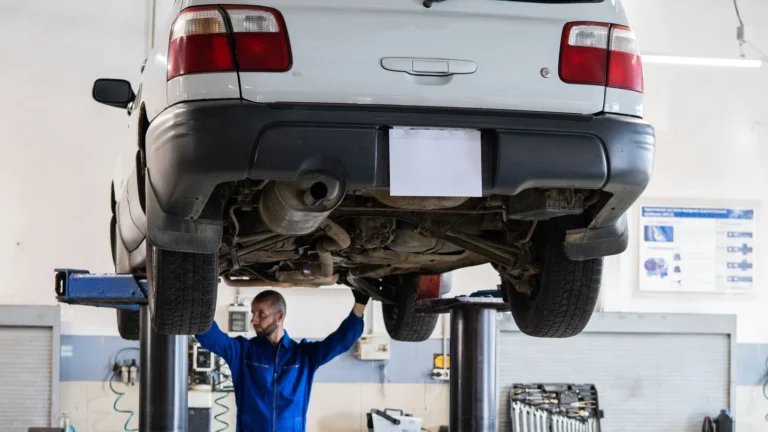
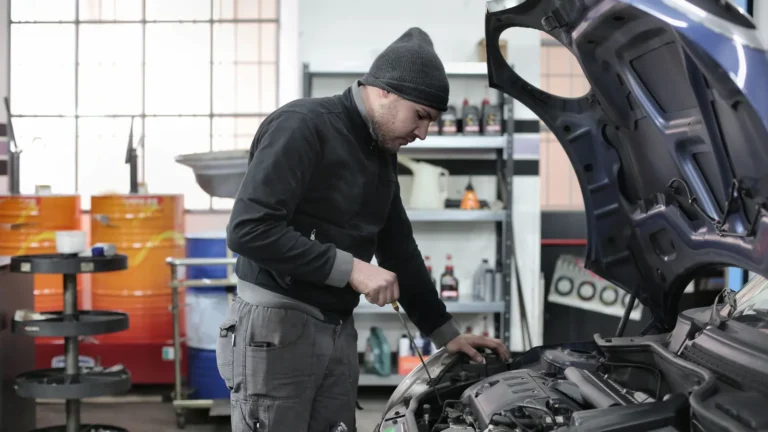
When you need expert Mercedes brake repair, Big Mission Automotive provides the specialized care your German engineering demands. From addressing dashboard warning lights to full rotor replacements, our certified technicians ensure your vehicle stops as precisely as it accelerates.
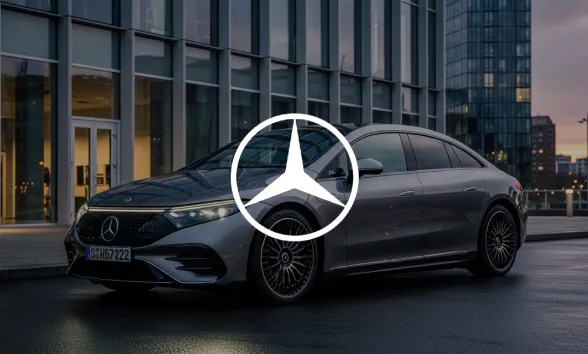
Your Mercedes-Benz isn’t just a car. It is a precision instrument.
That engineering excellence extends to a braking system designed to stop as aggressively as the engine accelerates. You can actually feel it when that performance wavers.
At Big Mission Automotive, we offer a specialized, honest alternative to dealership service right here in Colorado Springs. We don’t just swap parts. Instead, our factory-trained technicians use advanced diagnostics to maintain the delicate balance between high-performance safety and total luxury comfort. You get uncompromising European vehicle care paired with concierge-style convenience.
No guessing. Just precision.
Maintaining this standard requires understanding exactly what makes these German systems unique compared to standard vehicles.
Why Mercedes-Benz Brakes Require Specialized Attention
You likely chose a Mercedes-Benz for its superior handling and safety. The braking systems in these vehicles are engineered fundamentally differently than domestic or Asian counterparts. German manufacturers prioritize immediate stopping power and precise pedal feel over longevity.
This usually involves softer rotor and pad compounds that bite harder but may wear faster.
While this focus on performance explains why Mercedes brake service can cost more than a standard sedan repair, it ensures you can stop safely from Autobahn speeds. You are paying for performance-grade friction materials rather than generic durability.
Servicing these systems requires more than just mechanical know-how.
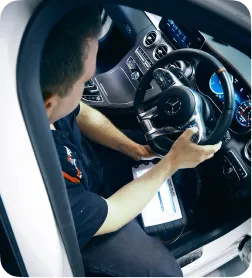
It demands factory-level diagnostic software to communicate with the vehicle’s computer. We must electronically retract calipers and recalibrate sensors to avoid damaging the complex electronic parking brake systems. Generalist shops often lack the specific proprietary tools to do this correctly. At Big Mission Automotive, our trained technicians follow strict protocols to protect your investment.
High-performance models require even more precision.
According to Mercedes-Benz, an AMG Break-In Service is required at 2,000 miles to ensure critical components like the rear locking differential are performing to spec. We understand these rigorous standards. Whether you drive a C-Class or an AMG GT, we treat your vehicle with the uncompromising European car care it demands.
Modern German engineering does not just rely on mechanical feel, though. Your car is constantly monitoring itself.
Recognizing Warning Signs: Sensors and Performance
That specific oversight capability begins with a small but mighty component: the brake wear sensor.
Remember the old way? Cars used to rely on a crude metal tab dragging against the rotor to scream at you. We all remember that sound. Your Mercedes is more refined. Instead of mechanical screeching, it employs a sophisticated electronic loop embedded directly into the brake pad.
Here is how it works technically. When the friction material wears down to a specific thickness, the sensor physically touches the rotor. Example. The contact breaks the electrical circuit. In that instant, the “Check Brake Wear” message appears on your dashboard.
Consider it a precise early warning system.
Just make sure you do not confuse this maintenance reminder with the ABS or ESP warning lights. A wear message typically means you still have a safe mileage buffer to get on the schedule with our factory-trained technicians. No panic necessary. An ABS light is different. That indicates an actual malfunction in the anti-lock safety system and requires immediate diagnostic attention.
Beyond the Dashboard
Computers catch the data points. You catch the feel.
If you notice a distinct pulsation or vibration traveling through the brake pedal, usually when you are scrubbing off speed on the highway, that is a dead giveaway. Your rotors are likely warped or suffering from uneven surface wear.
While pads can sometimes just be swapped out, compromised rotors usually require full replacement to restore that glass-smooth braking feel you expect from a European machine.
Squealing is common. A deep grinding noise? That is urgent.
That grind means metal is engaging with metal. You can often spot potential issues yourself just by looking through the wheel spokes. If the pad looks thinner than your pinky finger, or if you see deep grooves on the rotor surface, it is time for a visit.
Once we confirm the need for replacement, the next challenge is selecting components that match factory specifications.
Genuine OEM Parts vs. Aftermarket: Making the Right Choice
Your Mercedes-Benz was engineered with specific tolerances that demand respect. When we talk about maintaining that precision, the conversation inevitably turns to the hardware itself: OEM (Original Equipment Manufacturer) versus aftermarket components.
OEM parts are identical to what was installed on the assembly line in Germany. They guarantee a perfect fit.
Aftermarket options are a different story. Produced by third-party companies, they are often less expensive. But the catch is that quality varies wildly.
For high-performance vehicles utilizing cross-drilled rotors or specific ceramic pad compounds, “close enough” usually isn’t good enough. Generic rotors might warp under the heat your vehicle generates. Even worse, cheaper pads often produce excessive dust and noise that ruins the refined driving experience you expect from a European luxury car.
Of course, parts are only half the equation when calculating the final bill.
Understanding Mercedes Brake Repair Costs
Proper brake work on a Mercedes-Benz involves significantly more than just swapping out friction material. It demands a holistic approach to the entire system.
A common question we get is simply, “What is the price tag?” The honest answer varies wildly depending on what you drive (an AMG GT has very different stopping needs than a daily-driver C300, after all). Usually, high-quality European parts make up the bulk of the expense. We stick to top-tier components because compromising on safety with inferior materials just isn’t an option for us.
There is one practice, however, that we strongly advise against.
“Pad slapping.”
That is the industry term for a shop throwing new pads on while leaving the old rotors right where they are. Bad idea. German rotors are designed to be softer than their domestic counterparts (it maximizes grip), meaning they wear down right alongside the pads. If you reuse them, you are likely looking at squealing noises, vibration, or reduced stopping power shortly after leaving the shop. To make sure the system functions exactly as Stuttgart intended, replacing pads usually means doing the rotors, too.
When it comes to labor, a full brake job here at Big Mission Automotive typically comes in significantly lower than what the dealership quotes.
We don’t have their massive overhead to cover. But you need to be wary of the other extreme. If you see a generic shop advertising a “$99 brake special”? Run.
High-performance European braking systems simply cannot be serviced correctly for double digits. It’s impossible. Those offers are usually bait designed to get you in the door with sub-par parts, or the price suddenly skyrockets once your car is actually up on the lift. We believe in transparent pricing for genuine European care.
Knowing the cost is one thing. Understanding how we actually handle your vehicle is another.
What to Expect During Your Brake Service
At Big Mission Automotive, we don’t believe in guesswork. Your visit begins with a comprehensive physical inspection where technicians measure pad thickness and rotor runout down to the millimeter. This data, not just a dashboard light, drives our recommendations.
A common question arises here: does a full brake job include rotors?
With European vehicles, the answer is almost always no. You need the precision of trained technicians who treat these cars with the respect they deserve. General repair shops often lack the specific tooling required for proper Mercedes service. We have it.
Warranty Coverage and Technician Expertise
Peace of mind matters just as much as the actual repair. According to Mercedes-Benz, service contracts cover parts and labor for up to 4 years. We echo that commitment to security with our own industry-leading warranty that backs every job we do. Your safety isn’t something to gamble on. Our reputation across Colorado Springs is built on this integrity, proving that expert care doesn’t require a dealership visit.
Experience the Big Mission Difference
Putting off a brake repair usually turns a simple fix into a massive headache.
Your Mercedes was engineered for precision performance. Keeping it stopping safely requires a specific attention to detail that general repair shops often overlook. That’s why we bring something different to the table: a blend of old school mechanic integrity and factory-level expertise designed to ensure your vehicle performs exactly the way it was meant to.
You can skip the dealership runaround entirely.
At Big Mission Automotive, we focus on making the entire process seamless (and respectful of your time). We offer concierge-style service, including loaner cars and convenient 24/7 drop-off options, so your day doesn’t have to grind to a halt just because your car did. You deserve uncompromising European vehicle care without the usual hassle.
Ready to drive with confidence again? Contact us today or schedule your appointment online.