Quick answer: Cracked serpentine belt symptoms can include visible splits across the ribs, frayed edges, missing rib material, a shiny or contaminated surface, chirping or squealing, a battery warning, changing steering effort, weak air-conditioning performance, or rising engine temperature. Those signs do not prove the belt is the only problem. If vehicle control is affected, the engine is overheating, or a critical warning appears, stop safely and follow the owner's-manual instructions.
What the serpentine belt does
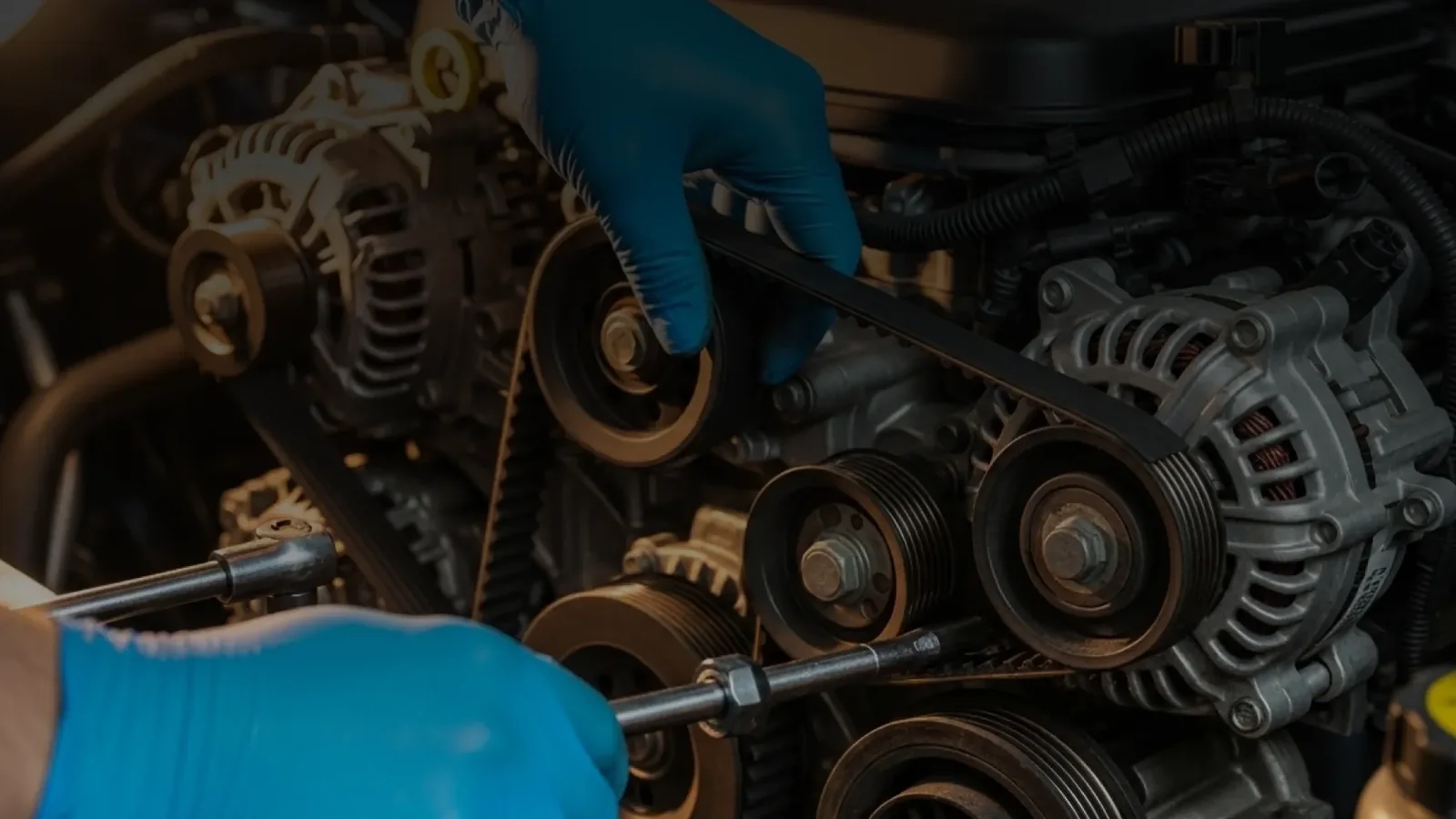
A serpentine belt, also called a drive belt, transfers power from the engine's crankshaft pulley to some of the vehicle's accessories. Depending on the design, those accessories may include the alternator, air-conditioning compressor, hydraulic power-steering pump, or water pump.
That list is vehicle-specific. Some vehicles use electric power steering, an electric water pump, more than one belt, or a different accessory-drive layout. The belt routing and the consequences of a failure therefore depend on the exact year, model, engine, and equipment.
The belt also works as part of a system. Pulleys, bearings, tensioners, dampers, alignment, and fluid leaks can all affect how it runs. A belt should not be assessed in isolation when noise, tracking, contamination, or unusual wear is present.
Cracked serpentine belt symptoms and visible wear
With the engine off and cool, visible belt damage may provide a reason to arrange an inspection. Do not place hands, clothing, hair, or tools near a belt while the engine is running.
- Cracks that cross the belt's ribs or grooves
- Frayed edges, exposed cords, peeling, or pieces missing from a rib
- A shiny or glazed surface that may accompany slipping
- Oil, coolant, or another fluid on the belt
- A belt that appears to track toward the edge of a pulley
- Uneven rib wear or a belt that sits abnormally in the pulley grooves
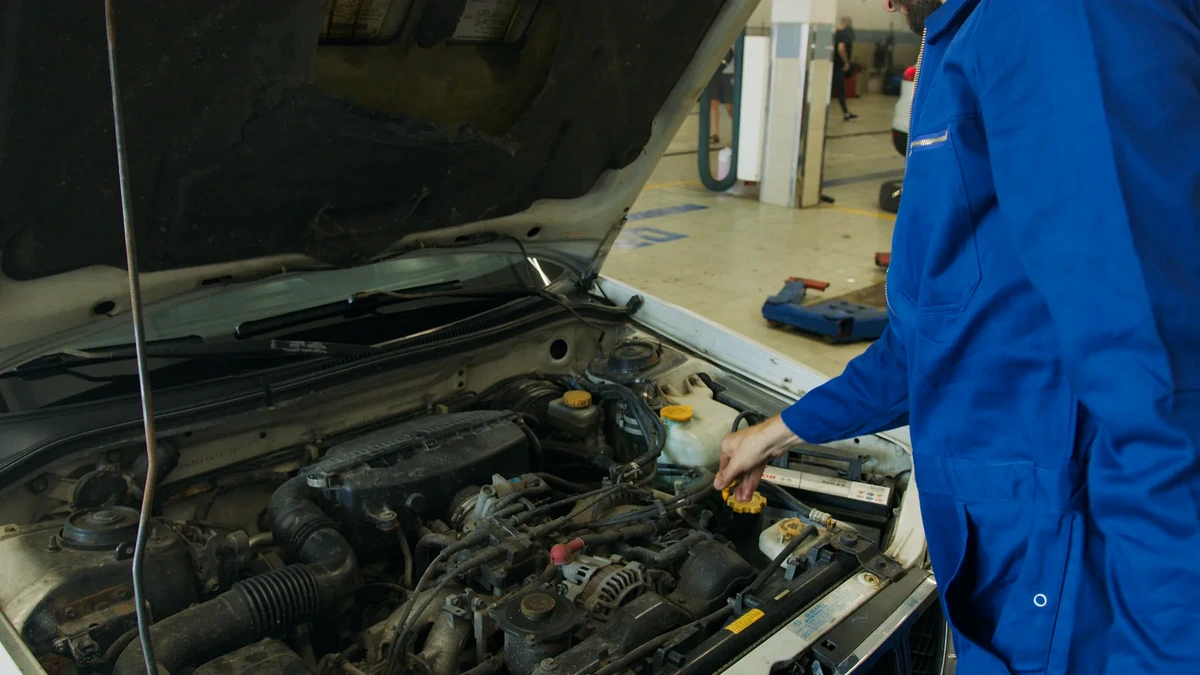
A photograph can document what was visible, but it cannot show the condition of every rib, pulley, bearing, or tensioner. Access may also be limited. Do not remove a cover or reach into the engine compartment to obtain a better view.
Why a modern belt may look normal while wearing
Cracking is not the only form of wear. Belt manufacturer Dayco's serpentine-belt inspection guidance explains that modern EPDM belts can lose material from the rib surface much like tire tread. As material is lost, the groove profile can change from a sharper V shape toward a more rounded U shape, reducing contact with the pulleys.
This is one reason a belt can need closer inspection even when it is not covered in obvious cracks. A technician may use an appropriate wear gauge and the vehicle's service information rather than relying on appearance alone.
What noise and accessory changes can mean
Chirping or squealing can come from the accessory-drive system, but sound alone does not identify the belt as the failed part. Dayco's belt-noise guidance lists possible causes that include worn belt ribs, low tension, pulley misalignment, rough or worn pulley bearings, accessory drag, installation issues, and contamination.
| What you notice | What it may indicate | Safe next step |
|---|---|---|
| Rhythmic chirp or longer squeal | Belt wear, tension, alignment, contamination, a pulley, or an accessory may be involved | Record when it occurs; do not apply belt dressing or reach near the moving drive |
| Battery or charging warning | The alternator may not be driven correctly, but the warning can have other causes | Follow the exact warning instructions and arrange vehicle-specific guidance |
| Steering suddenly becomes heavy | A belt-driven hydraulic steering pump may no longer be operating on vehicles equipped with one | Maintain control, move out of traffic safely, and do not continue merely to test it |
| Temperature warning or rising gauge | A belt-driven water pump may not be circulating coolant on vehicles equipped that way | Stop as soon as safely possible and follow the owner's-manual overheating procedure |
| Air conditioning changes | The compressor may not be driven normally, or an unrelated A/C fault may be present | Arrange inspection; this sign alone does not confirm belt failure |
Never use belt dressing to quiet a symptom. It can mask useful evidence and does not correct misalignment, insufficient tension, a damaged bearing, contamination, or another mechanical cause.
Why the whole belt-drive system needs inspection
A technician can identify the exact belt layout, inspect accessible rib and backing surfaces, and compare the condition with current service information. The assessment may also include belt tracking, pulley alignment, tensioner operation, bearing condition, accessory drag, and the source of any fluid contamination.
Dayco's overview of belts, pulleys, and tensioners describes how worn tensioners or pulley bearings can contribute to slip, glazing, misalignment, noise, and premature belt wear. That does not mean every related part should automatically be replaced. Parts and procedures should follow the findings for the exact vehicle.
Can you drive with a cracked serpentine belt?
There is no universal safe distance. A visible crack does not reveal how much service life remains, and the result of a break depends on which accessories the belt drives.
Do not continue driving if steering or vehicle control is affected, the engine is overheating, smoke appears, or the owner's manual tells you to stop for an active warning. Move out of traffic as safely as possible, shut the vehicle down when instructed, and arrange roadside or technician guidance.
If the only observation is visible wear or a new noise and no critical warning is active, avoid deliberately reproducing the symptom. Contact a repair facility for advice based on the vehicle and current condition rather than assuming it is safe until the next routine visit.
When should a serpentine belt be replaced?
Use the maintenance schedule and service information for the exact vehicle. Age, mileage, belt material, routing, operating conditions, prior replacement history, and inspection findings can all matter. A universal interval cannot account for those differences.
If service history is incomplete, bring the VIN, current mileage, prior invoices, and any warning or noise history to the inspection. Ask whether the recommendation is based on the scheduled interval, measured wear, visible damage, contamination, a related drive-system fault, or a combination of findings.
Drive-belt inspection near Colorado Springs
Colorado Springs and Palmer Lake drivers can review Big Mission Automotive's drive-belt replacement service when a belt shows wear, develops noise, or needs a vehicle-specific inspection. The shop's routine maintenance services can also help place the belt check in the context of the correct schedule and service history. If you are unsure how to respond to a new sign, contact Big Mission Automotive with the vehicle details and what you observed.
This article provides general educational information. Cracked serpentine belt symptoms do not determine belt condition, replacement timing, or whether a vehicle is safe to drive without identifying and inspecting the exact vehicle.