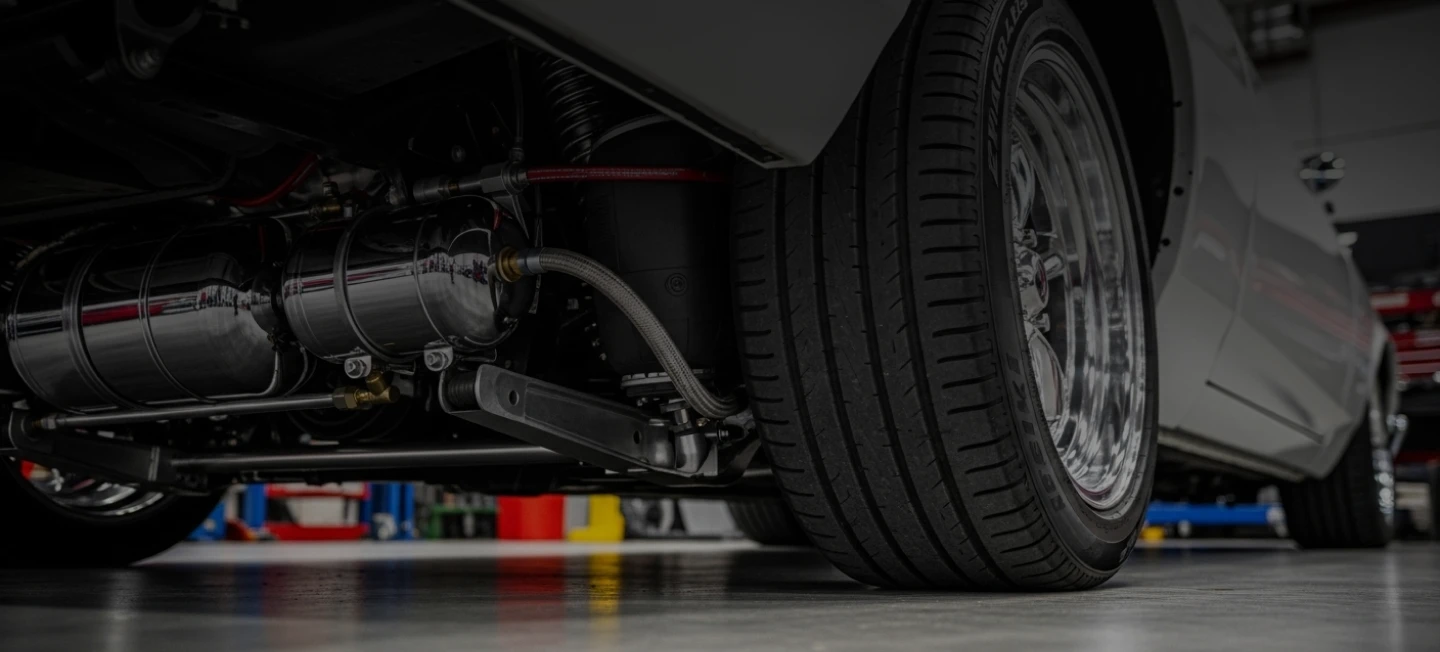
Air suspension does not have one fixed lifespan or replacement mileage. Air springs, compressors, lines, valves, and height sensors can develop problems at different times. The condition of those components—and any changes in ride height or ride quality—matters more than mileage alone.
If your vehicle sits lower after parking, takes longer to reach its normal height, or displays a suspension warning, an inspection can help identify what needs attention. Those symptoms do not automatically mean the entire system needs replacing.
Why air suspension lifespan varies
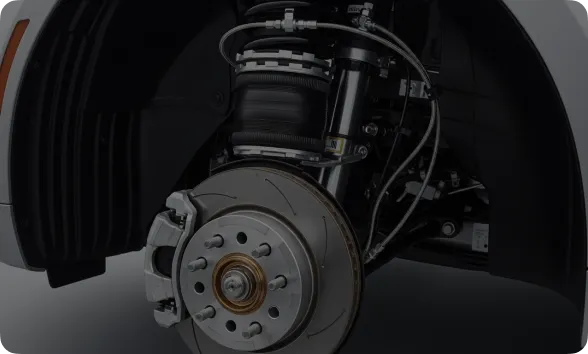
Air suspension is a system, not a single wear item. Air springs support the vehicle, while a compressor supplies pressurized air and valves control its movement. Sensors and electronic controls help manage ride height.
The equipment varies by model, year, and trim. Even two vehicles carrying the same model name may have different suspension configurations.
Individual parts also age differently. Rubber air springs can deteriorate, a connection can develop a leak, or a sensor can cause height-control problems while the springs remain intact.
That is why a blanket recommendation to replace everything at a particular mileage is not useful. The right repair depends on the vehicle’s service information and evidence from an inspection.
What causes air suspension components to wear out?
Aging air springs
Air springs contain flexible rubber bellows that move as the suspension works. According to Monroe’s air suspension diagnostic guidance, weathering and repeated compression and decompression can cause cracks in those bellows.
Mileage is only part of the picture. An older vehicle with relatively low mileage can still have age-related deterioration.
Air leaks and extra compressor demand
Leaks can develop in air springs, lines, connections, or valves. When the system loses air, the compressor may need to work harder to maintain pressure.
Monroe identifies that additional demand as a cause of accelerated compressor wear. A noisy or frequently running compressor therefore needs more than an automatic replacement recommendation: the technician should also check whether a leak is making it work harder.
Height-control and electrical faults
A vehicle that sits unevenly does not necessarily have a damaged air spring. Ride-height sensors, valves, wiring, or electronic controls may be involved.
Several faults can produce similar symptoms. Identifying the failed component helps avoid replacing parts that are not responsible for the problem.
Signs your air suspension needs an inspection
Look for changes from your vehicle’s normal behavior.
One corner sits low after parking
Repeated sagging at one corner or along one side can indicate air loss or a height-control problem. Note whether it happens overnight, after a shorter stop, or under particular conditions.
Some vehicles adjust their height during normal operation. One observation alone does not establish that an air spring is leaking.
The vehicle struggles to reach its normal height
Slow, incomplete, or inconsistent height adjustment deserves attention. The problem could involve air supply, a leak, a valve, or the controls.
Avoid repeatedly cycling the height settings just to reproduce the symptom. Describe what you noticed to the technician instead.
The compressor sounds different
New noise, longer running periods, or more frequent operation can be useful diagnostic clues. They do not prove that the compressor itself caused the original problem.
Ride quality changes or a warning appears
A harsher ride, unusual stance, or suspension warning should be checked using the instructions for your exact vehicle.
Tire problems and conventional suspension faults can cause overlapping complaints. If the cause is unclear, a broader suspension inspection can help distinguish between them.
Can you drive with a leaking air suspension?
There is no universal safe distance.
If the vehicle sits unusually low, a tire contacts the body, handling changes significantly, or the dashboard instructs you to stop, do not continue driving simply to see whether the suspension recovers.
Move out of traffic as safely as circumstances allow, follow the owner’s manual, and contact a repair facility or roadside provider. The appropriate transport method depends on the vehicle and its condition.
Never get beneath a vehicle supported only by its air suspension or a jack. Self-leveling systems can change height. Inspection and repair require proper support equipment and vehicle-specific procedures.
Does the whole system need replacing?
Not automatically. A confirmed problem with one component does not establish that every air spring, line, valve, and sensor has reached the end of its life.
A useful repair recommendation should explain:
- Which component failed and how the failure was confirmed.
- Whether another fault contributed to the damage.
- Which related components were inspected.
- Which repairs are necessary now and which are condition-based recommendations.
- How normal operation will be checked after the work.
For example, replacing a compressor without addressing a confirmed leak can leave the cause of excessive compressor demand unresolved.
The manufacturer’s procedures and the condition of related parts should guide the repair—not an assumption that all components must be replaced together.
What should owners of used vehicles check?
Ask for itemized repair records rather than relying on a statement such as “the air suspension was replaced.”
An invoice should identify the parts, repair date, and mileage. A replacement compressor does not mean the air springs or valves were replaced at the same time.
For an inspection, bring:
- The vehicle’s current mileage and VIN.
- Previous suspension repair invoices.
- The exact wording of warning messages.
- Notes about when sagging, noise, or ride changes occur.
- Photos of an uneven stance, taken safely from outside the vehicle.
These details can help a technician investigate an intermittent problem, especially if the vehicle returns to its normal height before the appointment.

Air suspension inspection near Colorado Springs
Big Mission Automotive provides air suspension repair and replacement at its Palmer Lake shop for drivers in the Colorado Springs area.
If your vehicle is sagging, adjusting height inconsistently, or showing a suspension warning, an inspection can establish which components need attention and whether related faults are adding strain to the system.
Contact Big Mission Automotive to discuss the symptoms. If the vehicle sits low or handles abnormally, call before driving it to the shop.
This article provides general educational information. Diagnosis, replacement requirements, lifting procedures, and transport decisions depend on the exact vehicle and current service information.