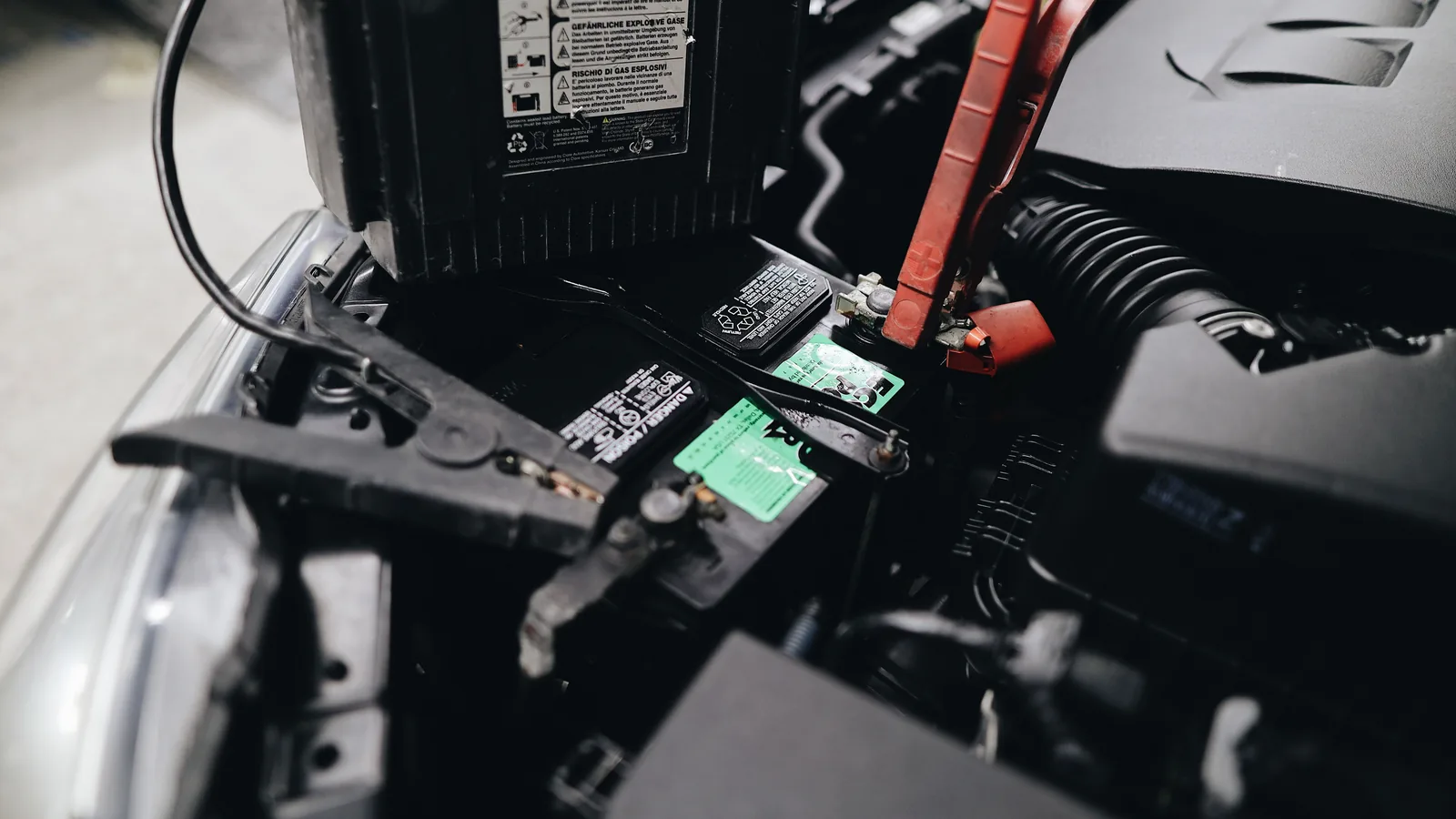
Quick answer: A new car battery can keep dying because of insufficient charging, an electrical drain while parked, a connection problem, or a battery or installation issue. The timing of the failure helps guide diagnosis, but it does not identify the cause. Have the battery and its installation checked before assuming another replacement will solve the problem.
The car started after the battery was replaced. A few mornings later, you were back to a slow crank or a jump start. Before buying another battery, write down what happened between those two starts.
Was the car parked overnight? Used for several short trips? Did the trouble begin immediately after installation? Those details can help separate an unresolved fault from a battery that has not received enough charge.
Start with when the problem comes back
A car that will not start does not automatically have a discharged battery. Tell the shop whether the engine turns slowly, does not turn at all, or turns normally without starting. Battery testing and a description of the starting behavior belong together.
Use the pattern as a record, rather than a diagnosis:
| When the trouble returns | What to tell the technician |
|---|---|
| Immediately after replacement | Battery specification, installation date, and whether the original starting complaint ever went away |
| The next morning | Time parked, last successful start, and any lights or equipment left powered |
| After several days unused | Length of storage, battery charge history, and any connected accessories |
| After repeated short journeys | Approximate trip lengths, frequency of starts, and electrical equipment used |
| During driving, with a charging warning or loss of electrical functions | Exact warning and circumstances; follow the owner's manual and seek safe roadside guidance |
If lights are fading, the engine is stalling, or the vehicle displays an urgent stop message, move out of traffic as safely as possible and arrange help. Do not drive to see whether the fault returns.
Check the replacement and its installation first
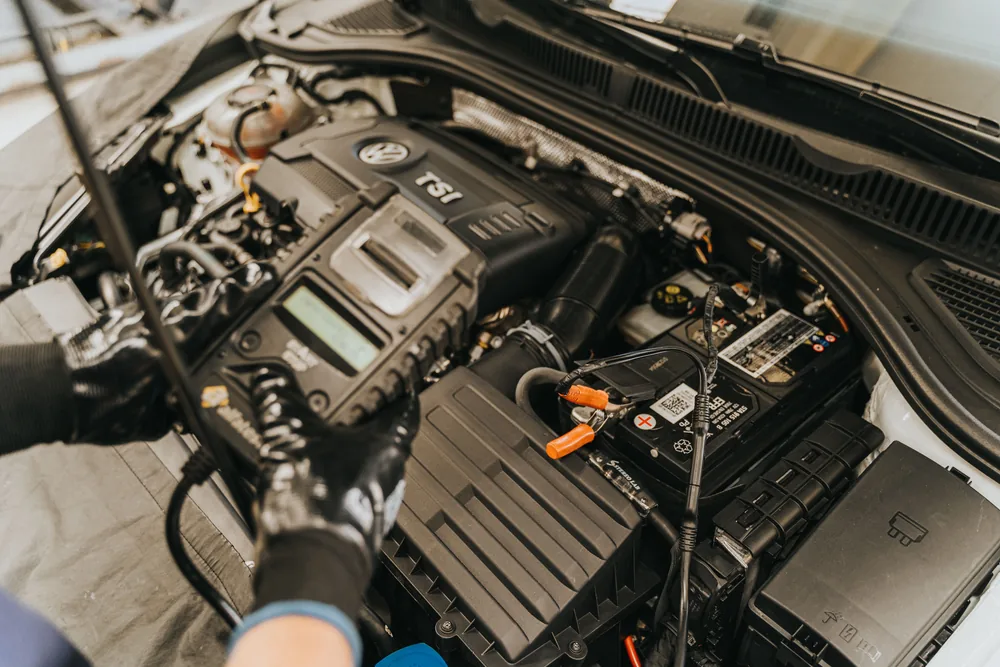
A new battery still needs the correct specification, adequate charge, and sound electrical connections. A loose terminal or poor ground can cause starting trouble even when the battery itself is usable. A recently purchased battery also needs testing if its condition is in doubt.
Bring the replacement invoice. It can identify what was fitted and whether the starting or charging system was tested at the time. Big Mission's battery testing and replacement service covers this part of the investigation.
Some vehicles require a battery registration or adaptation procedure after replacement. HELLA's technical guidance explains how battery monitoring and charging control affect replacement requirements. Ask whether the procedure applies to your exact vehicle and whether it was completed. Registration is neither universal nor a guaranteed cure for repeated discharge.
If it goes flat while parked
Some electrical use continues after a vehicle is switched off. The question is whether the draw is appropriate for that vehicle and how long it is parked. A battery that cannot start the engine the next morning needs investigation; the timing alone does not prove a parasitic drain.
Note anything that may remain powered, such as an interior light, dash camera, tracker, or plugged-in accessory. Record recent electrical installations or repairs too. These are clues for testing, not proof that the accessory caused the failure.
A technician can establish the battery's condition and starting charge, check charging performance, and investigate excessive current draw while parked. An intermittent problem may require observation under the conditions you described. Avoid repeatedly disconnecting the battery or pulling fuses before the appointment; that can change the conditions being investigated.
An overnight discharge also does not exclude an alternator fault. HELLA describes diode faults that can contribute to parked discharge, so a previous claim that the alternator is "good" needs its test context.
If your driving rarely gives the battery time to recover
VARTA explains that short journeys can leave too little time to replenish starting energy, especially when electrical demand is high. Repeated short trips and long periods unused are worth recording even with a new battery.
This does not establish that your driving pattern is the cause. A charging fault or abnormal draw can coexist with limited use. Ask whether the battery needs a proper recharge and whether a vehicle-compatible maintenance charger would suit your use. Follow the vehicle and charger instructions; a longer drive is not a substitute for diagnosing repeated failures.
Charging performance is one diagnostic branch
On conventional alternator-equipped vehicles, charging trouble can leave a replacement battery undercharged. DENSO's troubleshooting guide includes battery connections, wiring, fuses, the belt drive, and alternator output in its checks. The result needs comparison with the manufacturer's specifications.
If those tests identify a charging-unit problem, Big Mission's alternator service is the relevant repair route. A new battery going flat is not sufficient evidence to authorize that part on its own.
Never disconnect a battery cable with the engine running as a test. HELLA identifies this as a potential cause of alternator damage. Hybrids, EVs, and 48-volt systems need their own vehicle-specific diagnosis.
Bring a failure timeline, not another replacement guess
Use this checklist before the appointment. Record what you already know without deliberately recreating a breakdown:
- Replacement date, invoice, and any registration record.
- Last successful start and how long the car sat before the failure.
- Whether the engine cranked slowly, did not crank, or cranked without starting.
- Recent trip lengths and any connected or newly installed electrical equipment.
- Exact warnings and previous battery, charging, or draw-test results.
For unexplained repeat discharge around Palmer Lake and Colorado Springs, Big Mission Automotive's electrical diagnostics service is the main next step. Ask which findings support the proposed repair and whether the battery can retain charge after the underlying problem is addressed. Before driving in with an active warning, contact the shop for guidance on whether roadside assistance is needed.