Quick answer: A tire pressure light can come on in cold weather because falling temperatures lower tire pressure. Check cold tire readings against the vehicle's placard or manual, even if the warning later goes out; a flashing warning, recurring pressure loss, visible damage or changed handling needs professional assessment rather than an assumed weather explanation.
What a cold morning does and does not explain
A warning that appears before a chilly Palmer Lake commute deserves a pressure check. It does not become harmless because the dashboard looks normal by lunchtime.
NHTSA's tire guidance explains that marginally low pressure can fall below the warning threshold overnight, then rise as the tires warm or the outside temperature increases. The agency still recommends inspecting the tires and checking their pressure when the warning comes and goes.
Michelin's winter preparation guidance also explains the temperature relationship. That explains why a seasonal change can reveal low pressure; it cannot tell you whether a particular tire has a leak. You need actual readings and, where necessary, an inspection to answer that question.
Avoid adding an arbitrary amount of extra air for winter. The target comes from the vehicle's instructions, not a neighbor's car, an online estimate or the number that happens to turn the light off.
Check pressure before treating the light as a reset problem
Choose a safe place away from traffic. If a tire looks flat or damaged, or the vehicle's handling has changed, stop safely and arrange assistance instead of driving around to see whether the warning disappears.
For a routine check when there is no immediate safety concern:
- Find the recommendation. Read the Tire and Loading Information label, commonly on the driver's door edge or doorjamb, and the owner's manual. Note whether front and rear recommendations differ. The maximum pressure printed on the tire sidewall is not the vehicle's normal inflation target.
- Establish a cold reading. NHTSA defines cold tires as tires on a vehicle that has not been driven for at least three hours. Here, “cold” describes the measurement conditions, not simply a cold day.
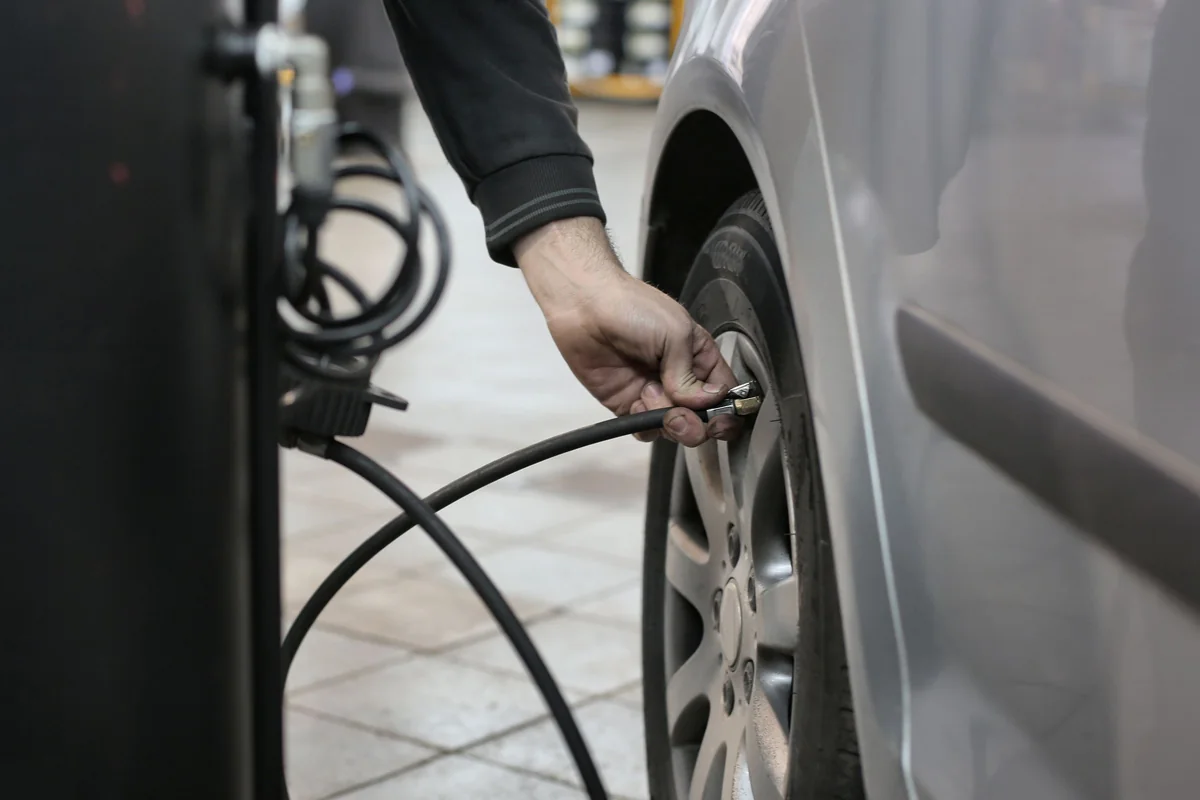
- Measure each tire with a suitable gauge. Record the readings and units. Check any spare according to the vehicle's instructions rather than assuming its target matches the road tires.
- Correct pressure to the applicable recommendation. If you cannot confidently identify the target or use the equipment, ask for help. Recheck after adjustment, and follow the vehicle's instructions for any monitoring-system update.
If you already drove to an air pump, tell the person helping you that the tires are warm. A warm reading is not directly interchangeable with a cold reading. Arrange the required cold recheck rather than treating a dashboard change as confirmation that the pressure is correct.
Cannot read the label, or unsure whether it applies to the wheels and tires fitted? Pause and ask a qualified tire professional to identify the appropriate specification. Supply the vehicle's model year and details of any wheel or tire changes. Do not copy a pressure from a different model's manual simply because its tire size looks similar.
Keep a reading log
“I added air yesterday” leaves useful details unanswered. A short record helps distinguish a different measurement condition from pressure that keeps falling. It also gives the shop a starting point without asking you to diagnose the tire yourself.
| Record | Useful detail |
|---|---|
| Vehicle target | Placard or manual values, units, and any front/rear difference |
| Measurement conditions | Date, approximate outside temperature and whether the vehicle had been driven |
| Individual readings | Each tire's position and measured pressure before adjustment |
| Work performed | Which tires were adjusted and the readings afterward |
| Warning pattern | Steady, coming and going, or flashing before remaining on |
| Other observations | Recent tire work, visible damage, repeated loss or handling changes |
Keep the original readings, even if the warning disappears after adjustment. If someone else checked the car, ask what was measured rather than recording only “tires checked.” A photo of the vehicle's label and a written list of readings are more useful than trying to remember four numbers later.
Use consistent wheel positions, such as driver-front and passenger-rear, rather than “the left tire.” Record the time as well as the date if you take another set of readings later that day. Tell the shop which set was taken before driving. Do not delay seeking help for visible damage or changed handling just to complete the log.
Recognize different warning patterns
A steady low-pressure warning and a flashing-then-steady warning can mean different things. Tell the shop exactly what happened instead of describing both as “the tire light.”
NHTSA explains that a monitoring-system malfunction may be indicated by a warning that flashes for 60 to 90 seconds and then stays illuminated. Check the owner's manual for the meaning of your particular display. Do not confuse a brief startup lamp check with that longer malfunction pattern.
A system warning does not establish that the actual tire pressures are correct. Likewise, a normal-looking tire does not establish its pressure: NHTSA notes that underinflation can be difficult to recognize visually. Use a gauge and preserve the warning details.
Avoid a generic reset-button sequence found for another model. Follow the correct vehicle instructions only after pressure and any underlying concern have been addressed. Repeatedly clearing the warning can leave the measurement or fault unresolved.
When to get help instead of topping up again
Temperature is one piece of the history. Ask a tire professional to assess concerns such as:
- One tire repeatedly measuring lower after pressure has been corrected.
- A warning returning alongside a cut, bulge, embedded object or other visible damage.
- A flashing-then-steady warning or a display you cannot interpret from the manual.
- New vibration, pulling or another change in how the vehicle behaves.
Do not pull out an embedded object, crawl underneath the car or attempt roadside tire work in an unsafe location. When there is damage, rapid pressure loss or a question about safe travel, arrange assistance and confirm how the vehicle should reach the shop.
Pressure checks remain part of routine maintenance, even when no warning is showing. NHTSA recommends checking at least monthly; the monitoring system is not a substitute for that routine. Follow the vehicle's additional instructions for loading and travel.
Bring useful notes to tire service
Share the vehicle details, your cold-pressure log, the warning pattern and any recent wheel or tire work. Ask what the shop needs to assess the tires and monitoring system, and whether the vehicle should be transported rather than driven.
An appointment on the calendar does not answer whether the car is safe to drive until then. Explain any worsening symptom when arranging help, including a tire that will not hold pressure. Keep the measurements available for the person receiving the vehicle.
For drivers around Palmer Lake and Colorado Springs, Big Mission Automotive's tire repair and service is the relevant service page. Contact Big Mission Automotive with the readings and observations so the shop can confirm the appropriate next step for your vehicle.