Quick answer: A ball joint is a pivoting ball-and-socket connection used in many vehicle suspension layouts, often between a control arm and steering knuckle. It supports movement as the wheel steers and the suspension travels. Noise, looseness, or steering changes can justify inspection, but the location, test method, and service limit depend on the vehicle.
What a ball joint does
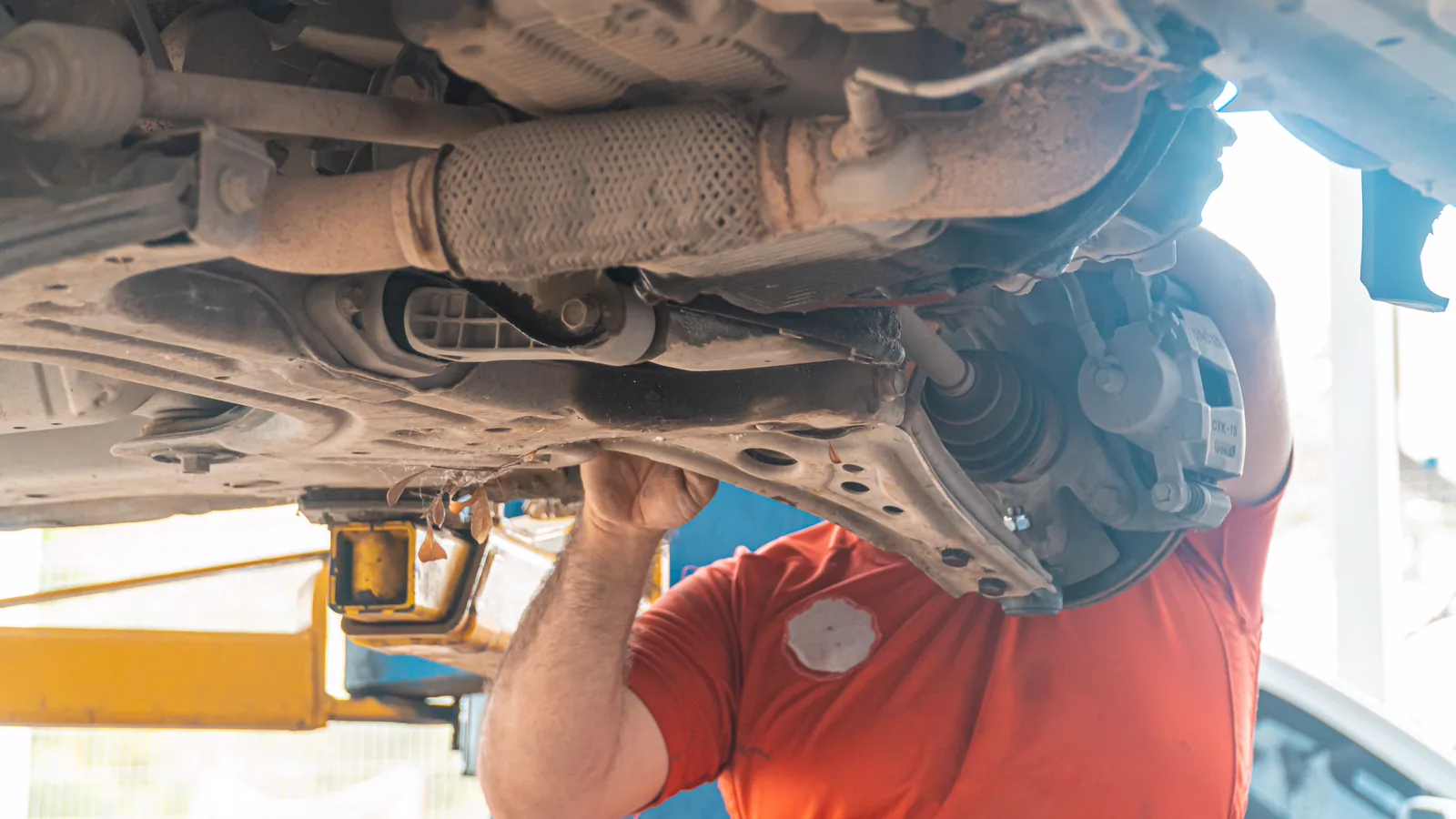
A ball joint lets two suspension parts change angle while staying connected. In many control-arm designs, that pivot sits between a control arm and the steering knuckle. The joint must accommodate steering movement and vertical suspension travel at the same time.
A National Highway Traffic Safety Administration recall record for specific Toyota vehicles describes a lower ball joint connecting the lower control arm to the steering knuckle. That record is useful as a concrete layout example. It does not establish the design used on every car.
Where ball joints may be located
Vehicle architecture controls the number and location of ball joints. One design may use a lower joint, another may use upper and lower joints, and a different suspension may package the pivot inside a larger control-arm assembly.
That variation changes the parts needed for repair. Some joints are separately replaceable. Others come with a complete arm. A vehicle identification number, current parts information, and the manufacturer’s service procedure provide a sounder answer than a generic diagram.
How a ball-and-socket joint moves
The ball rotates inside a socket as the wheel changes direction and the suspension moves through its travel. A protective boot helps keep lubricant in and contaminants out. The exact sealing, lubrication, and retention design varies.
For a broader view of the systems around the joint, Big Mission’s suspension, steering, and alignment overview explains how those areas relate without treating them as one repair.
How wear can develop
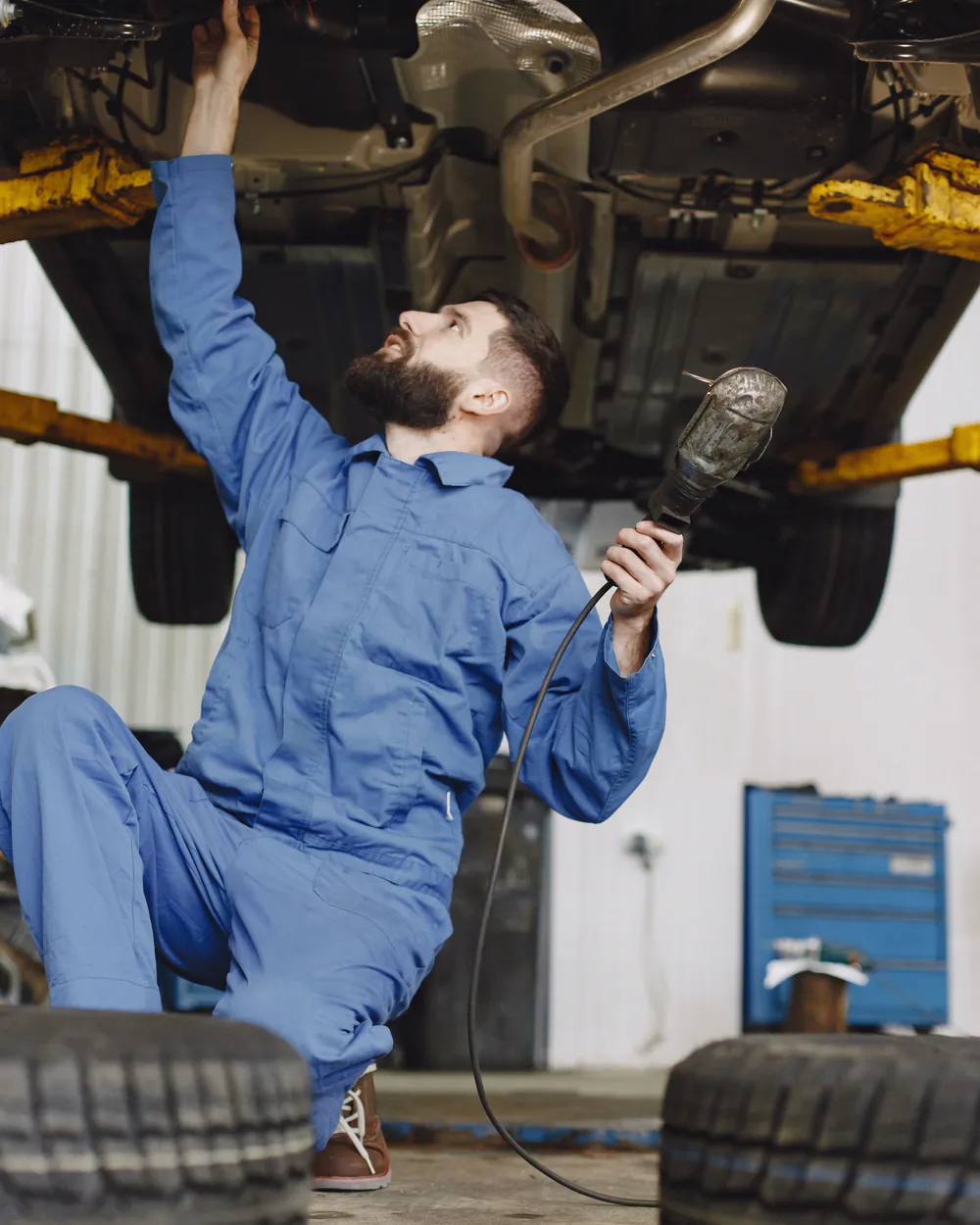
Every turn and suspension movement cycles the joint. Wear can increase if the joint loses lubrication, a boot is damaged, or contamination reaches the moving surfaces. Those are possible mechanisms rather than a diagnosis for a particular car.
A separate NHTSA equipment recall describes water and dirt entering recalled aftermarket assemblies and creating an abrasive environment. Its findings apply to that equipment. They show why boot condition and contamination may matter, not why every joint wears.
Possible signs that deserve inspection
A worn or loose suspension joint can present in more than one way. Drivers may notice:
- A clunk or knock over bumps or during a direction change
- Steering that feels less precise than usual
- Uneven tire wear that has more than one possible cause
- Visible damage around a joint or protective boot
- A change noticed during another suspension or alignment inspection
These observations overlap with other suspension, steering, wheel, and tire problems. Sound and feel alone cannot identify the failed part.
How technicians check a ball joint
The correct check depends on how the suspension carries load. A procedure may specify where to lift the vehicle, whether the joint stays loaded, where to measure movement, and which service limit applies.
This variation appears even in official service material. A Prevost bulletin hosted by NHTSA gives a particular loading condition and movement limit for a tie-rod ball joint on named coaches. It should never be copied as a universal suspension-ball-joint test.
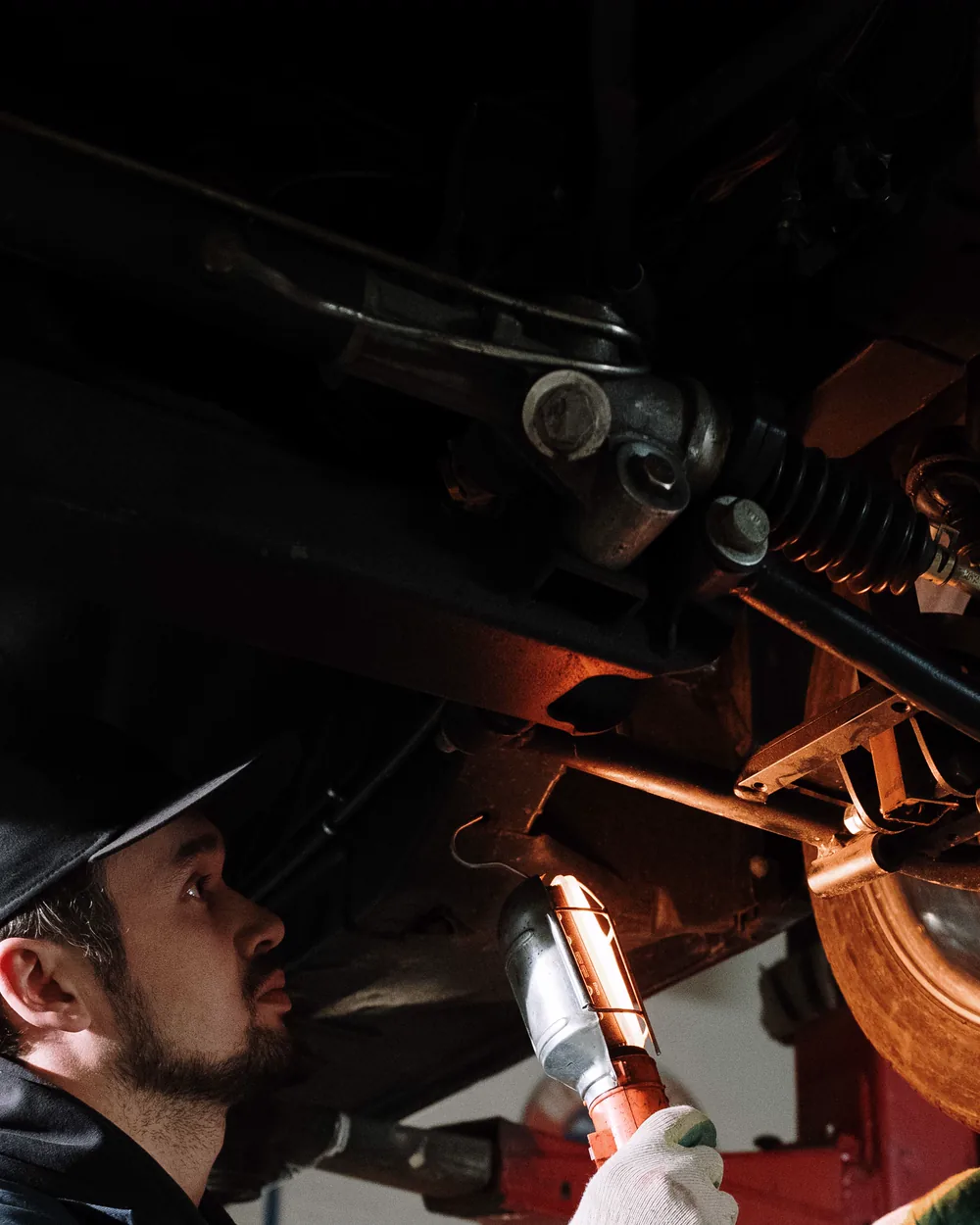
A responsible inspection may combine a visual check, controlled movement, measurements, and review of nearby components. The technician can then determine whether the joint, a larger assembly, or another part needs attention.
When a suspension inspection makes sense
Arrange an inspection when a new suspension noise, steering change, visible boot problem, or previously reported looseness appears. Seek prompt professional guidance if steering control changes suddenly or a component appears separated or severely loose.
Big Mission provides professional suspension inspection for European vehicles in the Colorado Springs area. Bring the vehicle’s recent repair history and describe when the symptom occurs. Those details help the shop reproduce the concern and follow the correct service information.
The inspection should answer four practical questions:
- Which component is producing the measured problem?
- Does the vehicle use a replaceable joint or a larger assembly?
- Did nearby tires, steering parts, or suspension parts sustain related wear?
- Which checks are required after the repair for this vehicle?
That evidence supports a repair decision without relying on a generic symptom list.