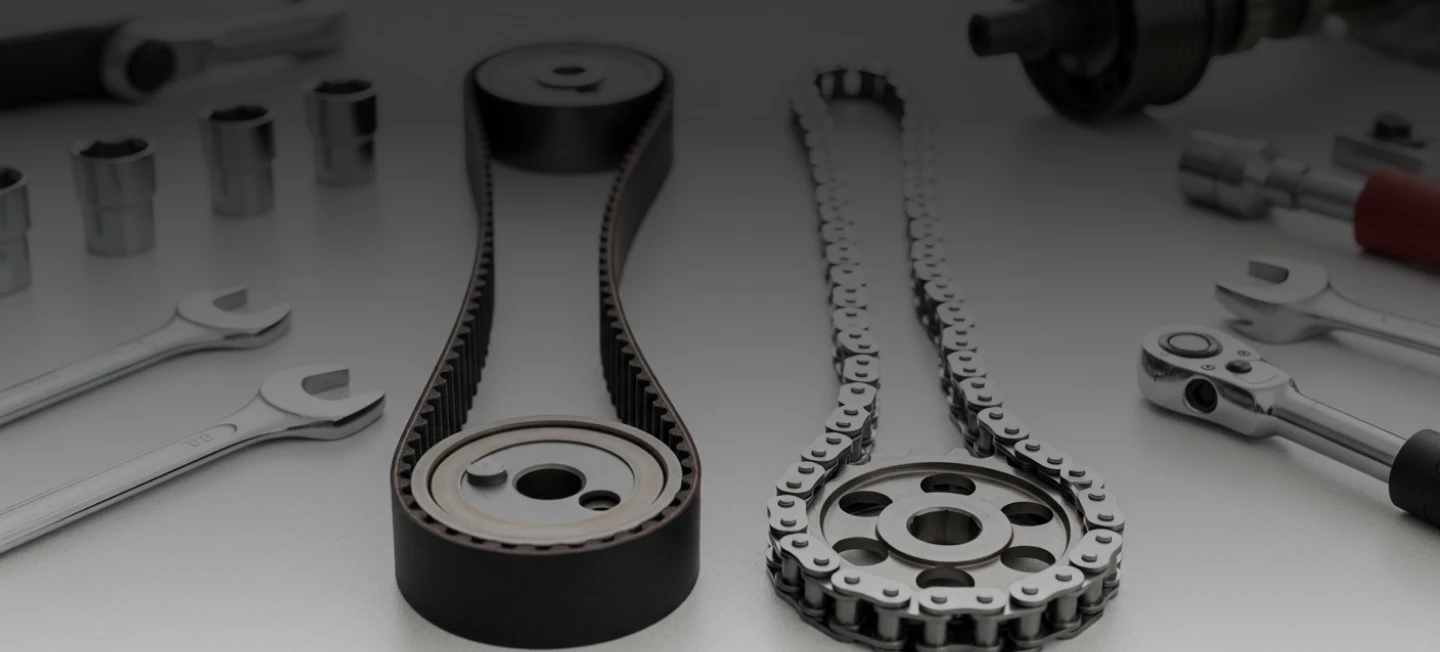
Quick answer: Replace a timing belt at the mileage, age, or inspection point specified for the exact vehicle and engine. There is no single interval for every car. If the maintenance history is missing or the due point has passed, identify the engine and arrange a vehicle-specific review rather than waiting for noise, visible damage, or a warning light.
What a timing belt does
A timing belt keeps the crankshaft and camshaft moving in the relationship required for the engine's valves to open and close at the correct time. Depending on the design, the same belt system may also drive a water pump, injection pump, or balance shaft.
That job is different from the accessory or serpentine belt visible on many engines. An accessory belt may operate components such as an alternator or air-conditioning compressor. A timing belt works with the engine's internal valve timing and is commonly protected by covers, so it may not be available for a casual visual check.
Continental's timing-belt overview explains that the belt provides synchronous power transmission and that inspection and replacement intervals are specified by the vehicle manufacturer. That manufacturer-specific schedule is the starting point for any replacement decision.
How to find the correct replacement interval
Begin with the maintenance information for the exact model year, engine, and market. Vehicles with similar names can use different engines or timing systems, and an interval published for one configuration may not apply to another.
Useful places to check include:
- The maintenance booklet or schedule supplied with the vehicle
- The current manufacturer's owner or maintenance portal
- Vehicle-specific service information identified by the VIN
- Invoices showing the date, mileage, parts, and related work from a previous replacement
Volkswagen, for example, directs owners to follow their vehicle's recommended maintenance schedule and provides model-specific maintenance information through its maintenance schedule portal. That approach is more reliable than applying a mileage quoted for a different Volkswagen or a different brand to your own vehicle.

Why there is no universal timing-belt mileage
Replacement guidance can account for mileage, elapsed time, inspections, operating conditions, or a combination of factors. The applicable rule is the one stated in current information for the vehicle. If a schedule says to replace the belt at a particular time or mileage, sometimes whichever comes first, follow that wording rather than converting it into a general rule for other cars.
Age matters because timing belts contain rubber and reinforcing materials that are subject to aging as well as use. Low annual mileage does not automatically remove a time-based requirement. Conversely, a high-mileage number found online does not extend a shorter interval specified for a particular engine.
Previous replacement also does not reset the schedule unless the date, mileage, and installed components are known. An invoice or repair record is better evidence than a seller's recollection, an under-hood sticker with incomplete details, or the belt's appearance.
What to do when the service history is missing
If you do not know whether the belt has been replaced, collect the VIN, current mileage, ownership records, and any available invoices. A technician can identify the engine and compare that information with the applicable schedule and service data.
Do not assume a clean-looking belt is new. A visible section cannot establish the age or condition of the entire belt, and some timing belts are not visible without removing covers or other components. Do not remove a timing cover or reach near moving engine parts simply to look for a date or crack.
When the documented due point has passed, or no trustworthy history is available, ask for vehicle-specific guidance promptly. The decision should account for the schedule, configuration, records, and findings rather than a generic photograph or universal mileage claim.
Does a timing belt give warning before it fails?
Do not rely on a warning symptom to schedule routine replacement. A belt can be due based on time or mileage even when the engine starts and runs normally. Noise, rough running, a no-start condition, oil or coolant near a cover, or a warning light can have many causes and do not confirm that the timing belt is responsible.
If the engine begins running abnormally, shuts off, or will not start, avoid repeated starting attempts intended to test it. Record what happened and obtain vehicle-specific diagnostic or transport advice. If a critical warning appears, follow the owner's-manual instructions and stop as soon as safely required.
A leak near the timing cover also deserves attention because the source and effect must be identified. Big Mission's guide to timing-cover leak symptoms and diagnosis explains why visible fluid does not identify the leaking component by itself.
Timing belt vs. timing chain: confirm which system you have
A timing belt and a timing chain perform a related synchronization job but use different materials, layouts, maintenance requirements, and service procedures. A vehicle family may use a belt on one engine and a chain on another. The presence of a chain does not justify applying a timing-belt interval, and the absence of a routine belt interval does not mean every timing-system concern can be ignored.
Use the VIN and current manufacturer information to confirm the system. Big Mission Automotive's timing belt and timing chain service page covers the shop's commercial inspection and repair service; this article is limited to deciding when a timing-belt replacement should be reviewed.

What may be included in a timing-belt replacement
The repair plan should follow the exact engine's procedure and the condition of the related system. Depending on the design, it may address tensioners, idlers, seals, fasteners, or a belt-driven water pump in addition to the belt.
Continental advises changing the tensioning pulley and idlers with the timing belt and considering the water pump where applicable. That product guidance does not prove every engine uses the same kit or procedure. The estimate should identify the parts required for the vehicle, explain any optional or condition-based work, and use the specified alignment and tensioning procedure.
Ask whether the recommendation is based on the scheduled interval, missing history, inspection findings, a leak, a related component, or several factors. A clear estimate should also document the current mileage and the parts installed so the next owner has a reliable service record.
Why replacement timing matters
If the crankshaft and camshaft lose synchronization, the engine can stop running. Continental notes that, in a worst-case failure, valves and pistons can collide. The exact consequences depend on the engine design, so no article can predict the damage from a particular failure without identifying and inspecting the vehicle.
Preventive replacement is intended to address the specified interval before that uncertainty becomes a breakdown. Waiting for a sound or visible crack can defeat the purpose of scheduled service.
Timing-belt service near Colorado Springs
Colorado Springs and Palmer Lake drivers can bring the VIN, current mileage, maintenance booklet, and prior invoices to Big Mission Automotive for a vehicle-specific timing-system review. The shop's routine maintenance services can help compare the documented history with the applicable schedule, while its engine and powertrain services cover related diagnostic and repair needs.
If the due point is approaching, has passed, or cannot be confirmed, contact Big Mission Automotive before relying on a generic interval. This article provides general educational information; the correct replacement timing and parts depend on the exact vehicle and current service information.