Mon - Fri 8:30 - 5:00 | Sat - Sun Closed

579 County Line Rd Unit C Palmer Lake, CO 80133

August 27, 2026

Emergency brake vs. parking brake: how it works and warning signs

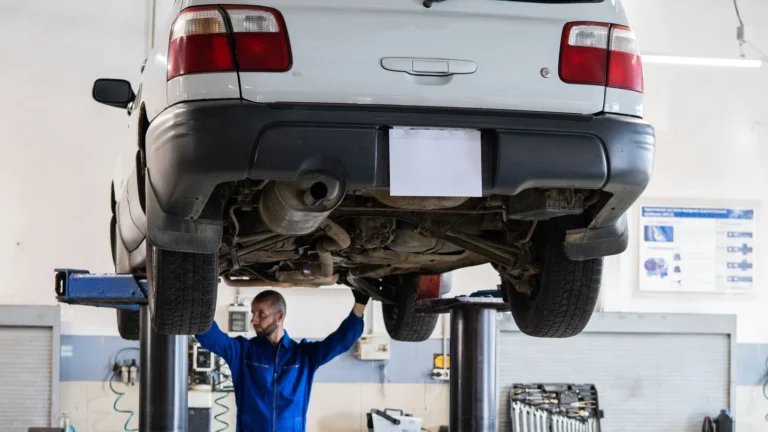
Mechanic inspecting the underside of a raised vehicle in a workshop

Quick answer: Emergency brake and parking brake usually refer to the same secondary system used to hold a stopped vehicle. Federal rules in the United States call it the parking brake, while drivers often say emergency brake or e-brake. Controls may be a hand lever, foot pedal, or electronic switch, and the correct use, release method, warning indicators, and any moving-vehicle function depend on the vehicle.

Are the emergency brake and parking brake the same thing?

In everyday conversation, emergency brake, parking brake, and e-brake often describe the same system. The official term used in U.S. light-vehicle standards is parking brake.

Federal Motor Vehicle Safety Standard No. 135 distinguishes the parking brake from the service brakes used through the normal brake pedal. Within the vehicles covered by that standard, the parking brake has an independent control and uses friction with mechanical means to retain engagement.

The name emergency brake remains common because some systems have historically provided a secondary way to slow a vehicle. That wording does not prove that every modern vehicle has the same emergency function or procedure.

The parking brake is separate from the service brakes and Park

The service brakes slow the vehicle during normal driving when the driver presses the brake pedal. The parking brake is intended primarily to help hold a stopped vehicle.

The transmission’s Park position is also separate. In an automatic transmission, Park engages a transmission mechanism. The parking brake applies a holding force through its own system. Using one does not turn it into the other.

Vehicle manufacturers specify the correct parking sequence for each model. A 2014 Ford F-150 owner’s manual provides one example: it tells the driver to set the parking brake whenever the vehicle is parked and also select Park. That instruction is specific to the named vehicle, so use your own manual for the exact sequence.

Common parking-brake control types

The control inside the cabin may look different even when the system serves the same basic holding purpose.

Control type What the driver may see What varies by vehicle
Hand lever A lever beside or near the driver’s seat Release button, cable routing, adjustment, and wheel-end hardware
Foot pedal A separate pedal at the side of the footwell Whether release uses the pedal again or a separate handle
Electronic switch A switch marked with a parking-brake symbol Automatic application, automatic release, actuator layout, fault messages, and service procedures

The Ford manual above shows a foot-pedal system with a separate release lever. Other vehicles use hand levers or electronic controls. A control’s appearance does not reveal every component underneath the vehicle.

Technician inspecting components beneath a raised vehicle
Parking-brake hardware and adjustment points vary by vehicle, so inspection needs the correct service information.

How to use the parking brake

Apply and release the system only as the vehicle’s owner’s manual directs. The sequence can change with a manual or automatic transmission, an incline, a trailer, an electronic control, or an automatic hold feature.

Useful habits include:

  • Confirm that the vehicle is fully stopped before following the parking procedure.
  • Check the instrument display for the expected applied or released indication.
  • Verify that the vehicle remains stationary after the parking sequence is complete.
  • Release the parking brake as directed before driving.
  • Investigate a warning, beep, dragging sensation, or failure to hold instead of forcing the control.

Avoid guessing when an electronic system behaves differently from a mechanical lever or pedal. Automatic application and release conditions are model-specific.

Electronic parking brakes add vehicle-specific behavior

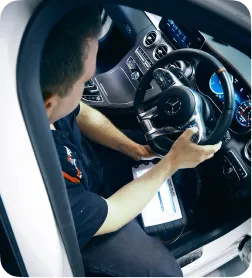
An electronic parking-brake switch can command actuators rather than pulling a hand lever or pressing a mechanical pedal. The visible control is simpler, but the operating logic may include automatic application, automatic release, warning messages, and diagnostic service modes.

The 2023 Mercedes-Benz E-Class operator’s manual provides a concrete example. It describes defined conditions for automatic and manual operation, red and yellow warning indicators, and instructions for certain faults. Those details apply to that vehicle configuration rather than every electronic parking brake.

Big Mission’s Mercedes brake service page describes the related commercial path for European brake inspection and repair. The owner’s manual and vehicle-specific service information still control the operating and repair procedure.

Can the parking brake stop a moving car?

Do not assume that the words emergency brake authorize pulling a lever, pressing a pedal, or holding an electronic switch while driving. Vehicle behavior can differ sharply, and an incorrect input can affect stability or damage components.

The Mercedes-Benz manual includes a moving-vehicle emergency function for the specific model and explains how its switch behaves. That is a model-specific example, not a universal instruction. If the normal service brakes fail, concentrate on maintaining control and follow the emergency guidance written for the exact vehicle. Contact emergency services or roadside assistance when needed.

Warning signs that deserve inspection

A parking-brake concern may involve the control, linkage, actuator, friction parts, adjustment, warning system, or another brake component. Arrange inspection when you notice:

  • The vehicle does not remain held after the parking brake is applied
  • The lever or pedal moves farther, feels different, or will not stay engaged
  • An electronic switch does not apply or release the system normally
  • The parking-brake indicator remains on after release or flashes unexpectedly
  • A warning message or beep returns
  • The vehicle feels held back after release
  • Heat, odor, scraping, or abnormal noise appears near a wheel after release

A shared red brake warning can represent more than parking-brake application. The federal standard allows a common indicator labeled “Brake” to report multiple brake conditions. Read the exact message and use the owner’s manual instead of assuming the light only means the parking brake is on.

What a professional inspection may check

The technician can confirm the complaint and identify the system installed on the vehicle. Depending on the design and symptom, the inspection may include:

  • Control movement, switch operation, and applied or released status
  • Cables, linkages, actuators, connectors, and visible mounting points
  • Parking-brake friction parts and related rear-brake components
  • Holding performance and manufacturer-specified adjustment
  • Warning indicators, stored faults, and electronic service information
  • Evidence that the brake remains partly applied after release

Big Mission provides brake-system inspection for European and other vehicles in the Colorado Springs area. Share the exact dashboard message, when the problem occurs, and whether the vehicle holds and releases normally.

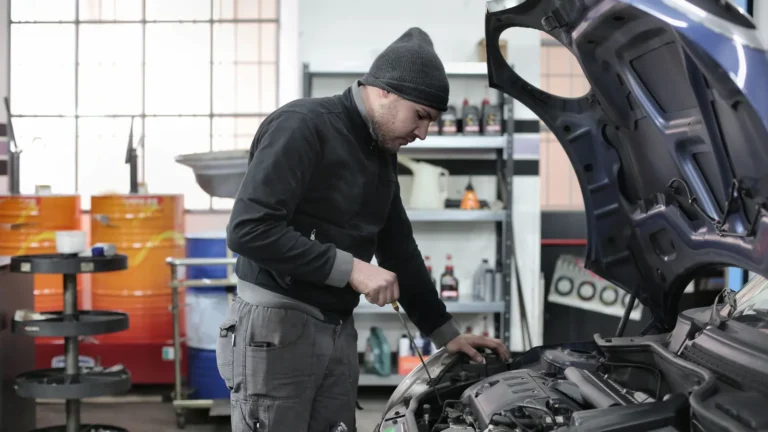
Mechanic using a work light to inspect brake and suspension components
A technician can check whether the parking brake applies, releases, holds, and reports faults as the vehicle manufacturer specifies.

When to schedule parking-brake service

Schedule an inspection when the parking brake will not hold, will not release, produces a recurring warning, or seems partly applied while driving. Prompt attention is also appropriate when a switch, pedal, or lever changes suddenly or the vehicle manual directs you to stop driving after a fault.

Bring the owner’s manual if the warning or control behavior is unfamiliar. The correct next step depends on the parking-brake design, the service-brake system around it, and the evidence found on that vehicle.

Ready for a Better
Automotive Experience?

Whether it’s scheduled routine maintenance or an unexpected breakdown, our experienced, factory-trained technicians are dedicated to providing premium service with the utmost care from start to finish.