Quick answer: A check engine light means the vehicle’s onboard diagnostics detected a condition that needs attention. A solid light with no other symptoms usually calls for prompt diagnosis, while a flashing light or rough running needs a faster, vehicle-specific response. The light and any stored code guide the investigation; they do not prove which part failed.
What the check engine light means
The check engine light is also called the malfunction indicator lamp. It is part of the vehicle’s onboard diagnostic system, often shortened to OBD. The system monitors emissions-related operation and other conditions defined by the vehicle manufacturer. When it detects a qualifying problem, it stores information and may turn on the light.
The US Environmental Protection Agency explained in 2003 that all 1996 and newer passenger vehicles were required to have OBD systems. EPA described the system as designed to trigger a check engine light when monitored pollution-control devices are not functioning properly.
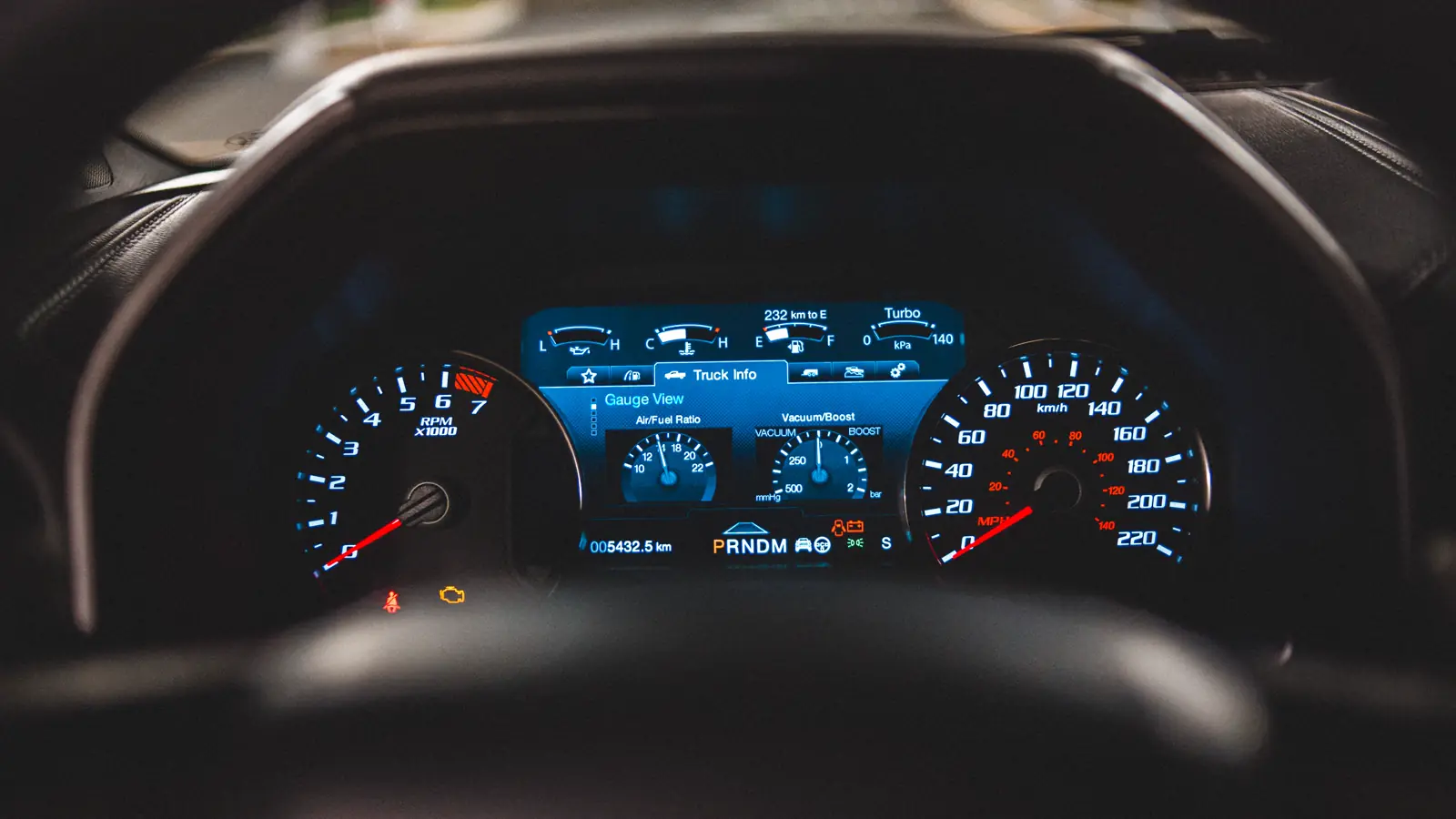
That light is an alert, not a diagnosis. It does not show whether the issue is a connector, circuit, sensor reading, emissions leak, ignition problem, mechanical condition, software concern, or something else. The exact symbol and instructions also vary, so confirm the warning in the owner’s manual for the year, model, and equipment.
Some vehicles use wording such as “Service Engine Soon” for the malfunction indicator, while a separate maintenance reminder can refer to scheduled service. Do not identify a warning by wording or color alone. Use the exact instrument-cluster legend in the owner’s manual, including any instructions tied to a steady or flashing display.
Solid versus flashing: how urgency changes
The way the light behaves matters, but it must be read with the vehicle’s other warnings and symptoms.
| What you notice | A cautious next step |
|---|---|
| Solid light, vehicle feels normal | Check the exact owner’s manual, note when the light appeared, and arrange diagnosis promptly. Do not assume that normal driving proves the issue is harmless. |
| Flashing or blinking light | Follow the exact manufacturer’s warning immediately. Move out of traffic when it is safe to do so, and seek qualified guidance rather than continuing as usual. |
| Light with shaking, rough running, power loss, smoke, strong fuel odor, overheating, or a critical red warning | Stop in a safe place as soon as conditions allow. Shut the vehicle down when required by its manual and arrange roadside or technician guidance. |
Ford’s owner-manual material gives one manufacturer-specific example. It says that if the light flashes, an engine misfire may be occurring and increased exhaust-gas temperatures can damage the catalytic converter or other components. That wording applies to the Ford material it appears in. Another vehicle may use different instructions.

Can you drive when the check engine light is on?
There is no responsible universal mileage or time limit. The answer depends on the light behavior, other warnings, how the vehicle runs, and the manufacturer’s instructions.
For a steady light with no noticeable change, the owner’s manual should determine whether and how the vehicle may be moved. Arrange diagnosis promptly rather than assuming that normal operation proves the condition is harmless. A flashing light or a clear change in how the vehicle runs deserves a quicker response.
Do not rely on this article when a red oil-pressure or temperature warning appears, the vehicle loses power, smoke is visible, fuel odor is strong, or safe control is affected. Pull over safely and follow the exact emergency guidance for that vehicle.
What a diagnostic code can and cannot tell you
A scan tool can retrieve a diagnostic trouble code and related data. The code points toward a system, circuit, or detected operating condition. It does not automatically prove which part should be replaced.
For example, a code that names an oxygen-sensor circuit does not establish whether the sensor, wiring, connector, exhaust condition, fuel control, software, or another factor produced the result. A misfire code identifies the cylinder or pattern the computer detected, not the mechanical or electrical cause.
Useful diagnosis combines the code with symptoms, freeze-frame or live data when available, service history, visual inspection, applicable technical information, and tests selected for the exact vehicle. Big Mission’s diagnostics and inspections overview describes the broader service category without turning a code into a parts list.
Possible problem categories behind the light
Many different conditions can illuminate the same engine-shaped indicator. Instead of guessing one failed part, a technician may need to investigate categories such as:
- Emissions-control or evaporative-emissions system conditions
- Air, fuel, ignition, or combustion irregularities
- Sensor readings, wiring, connectors, or control-module communication
- Mechanical or drivability problems that affect monitored operation
- Vehicle-specific software, calibration, or service-information concerns
These are categories, not a ranking of common causes. A loose cap may explain one vehicle’s alert, while another vehicle with similar dashboard behavior can require a completely different test path. Replacing a component because its name appears in a code description can add cost without resolving the condition.
What to note before a diagnostic appointment
Good observations can help a technician reproduce the concern. Record the details without repeatedly driving the vehicle to make the light return:
- Whether the light was solid, flashing, or changed between the two
- Any other warning symbol or exact dashboard message
- Whether the engine was cold, warming up, idling, accelerating, or cruising
- Shaking, hesitation, reduced power, unusual sound, smoke, or odor
- Recent fuel, battery, repair, or maintenance work
- Whether the light appeared after refueling or under another repeatable condition
- The vehicle year, model, engine, mileage, and relevant service history
Avoid clearing the code or disconnecting the battery just to turn the light off. That can remove information that helps explain when the condition occurred. If the vehicle requires an immediate safety response, prioritize that response over collecting notes.
Will the check engine light turn off on its own?
Depending on the vehicle, the light can turn off when the system no longer detects the qualifying condition. That does not show why it appeared, whether a code remains stored, or whether the problem will return.
A light that goes away can still be worth discussing if it flashed, returned more than once, appeared with a drivability change, or followed recent work. Write down the circumstances before they are forgotten. Do not repeatedly clear the warning as a substitute for diagnosis.

When to arrange diagnostics
If the light is on, note its behavior and any symptoms, then follow the vehicle’s manual. Big Mission Automotive’s check engine light diagnostics and repair page provides the local service path for Colorado Springs-area drivers who need the warning investigated.
Bring the observations, service records, and any prior code report. A code can help direct the next test, but a complete recommendation should follow the evidence found on that vehicle.
This article provides general educational information. Warning meanings and safe next steps depend on the exact vehicle, other alerts, current symptoms, and manufacturer guidance.